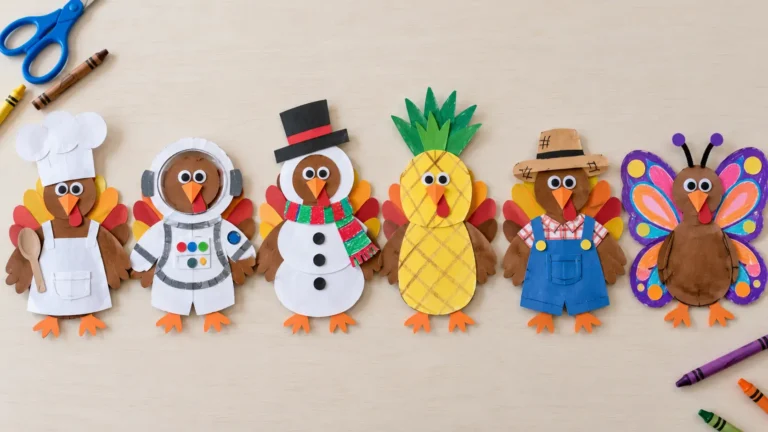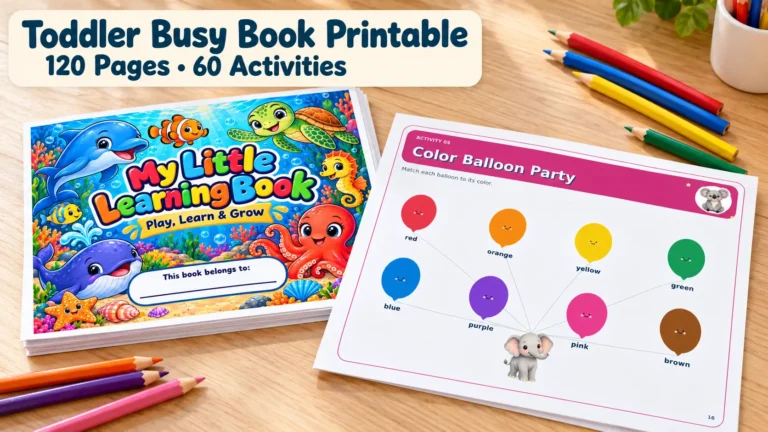
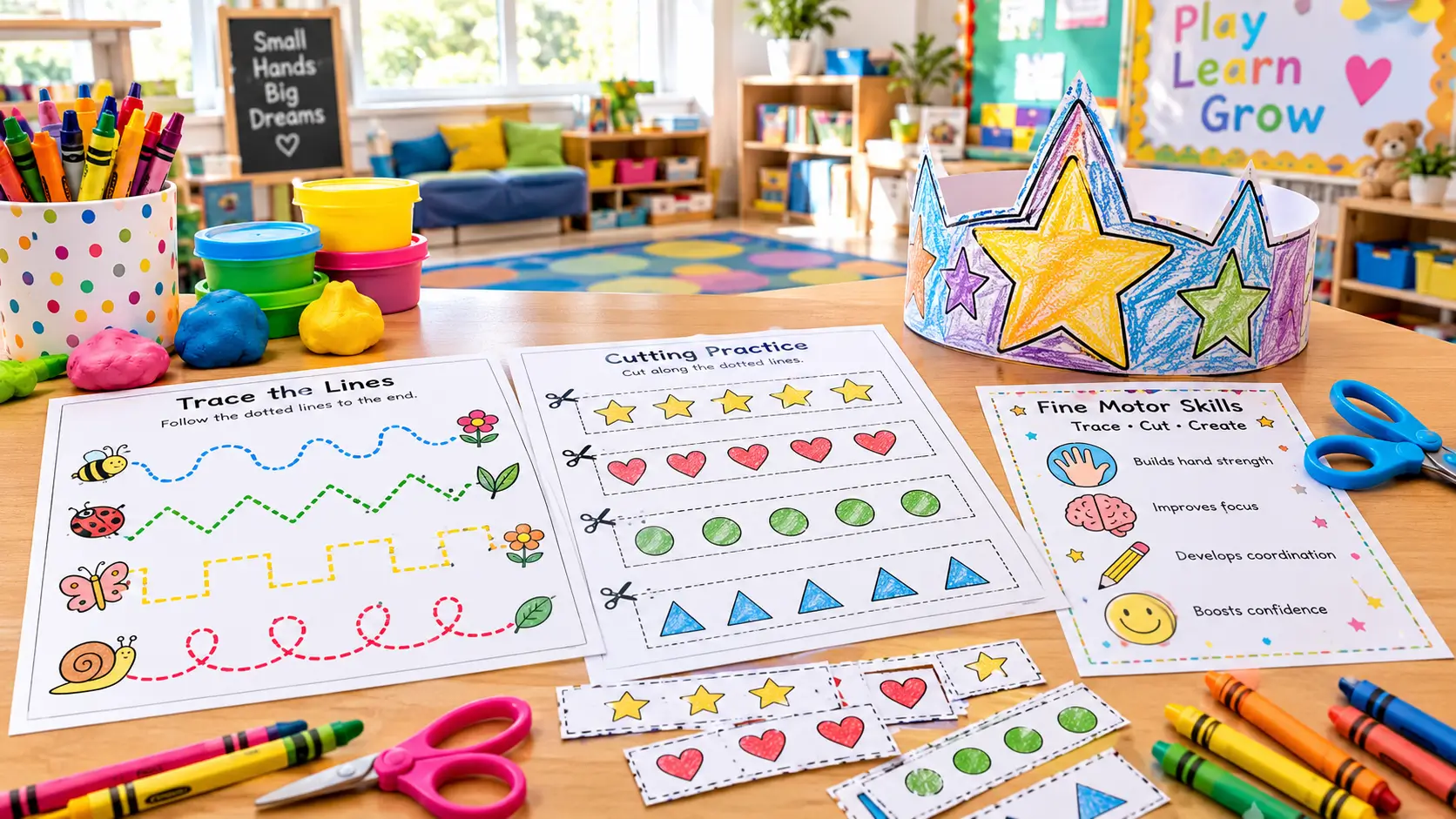
Fine motor skills worksheets and hands-on movement activities give young children opportunities to practice hand control, coordination, and everyday classroom tasks. Before young learners can master handwriting, construct complex art projects, or independently complete self-care tasks, they need a solid foundation in hand strength, finger dexterity, and bilateral spatial coordination.
Teachers and parents can use fine motor skills worksheets alongside hands-on activities to give children practice with cutting, tracing, and coordinating both hands. Choose activities that match each child’s current abilities, and adjust the tools or level of adult support when needed.
Table of Contents
The Science Behind Fine vs. Gross Motor Skills
Understanding how young children gain physical control over their bodies helps educators design better lesson plans and center activities. Research in developmental pediatrics shows that gross motor stability serves as the physical anchor for delicate hand movements.
- Gross Motor Development: Involves the large muscle groups of the arms, legs, and core. Activities like jumping, balancing on one foot, and tossing beanbags build posture control and spatial orientation required for sitting at a school desk.
- Fine Motor Development: Focuses on the small muscle movements of the hands, wrists, and fingers. Using targeted fine motor skills worksheets reinforces thumb-index pincer grasps, palm isolation, and two-handed coordination needed for holding a pencil, turning pages, and using safety scissors.
According to a seminal study published in the American Journal of Occupational Therapy, early hand strength interventions directly correlate with long-term academic success and handwriting fluency. You can review the full research findings on The American Journal of Occupational Therapy (AJOT).
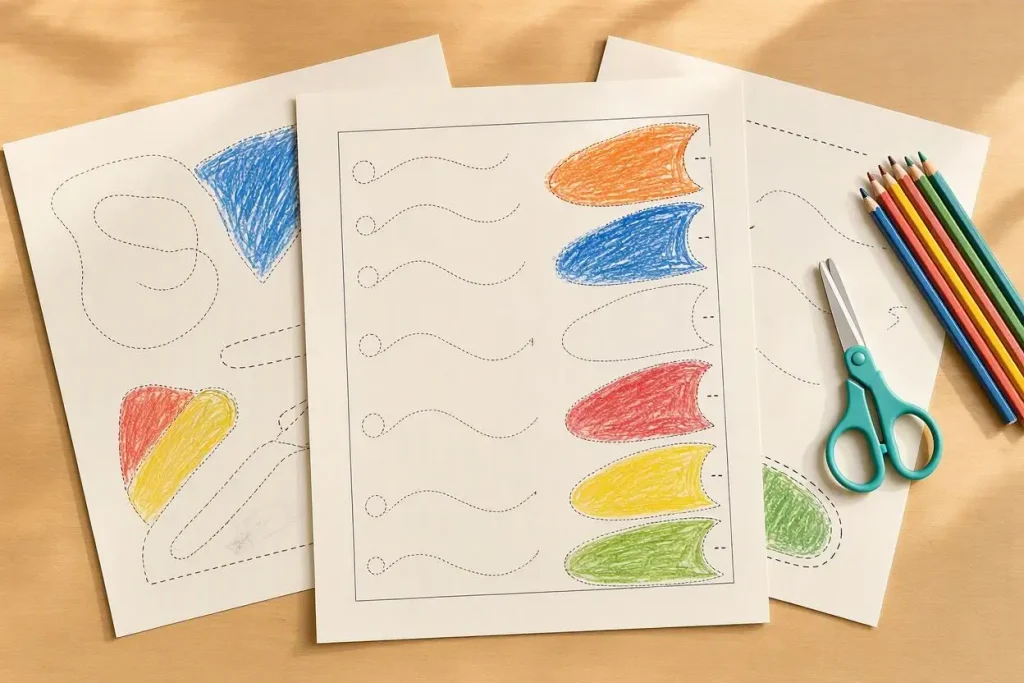
Top 5 Exact Printable Products for Pre-K & Kindergarten
To make lesson planning effortless, here are 5 specific, high-converting product packs designed to target finger strength, scissor control, and spatial awareness:
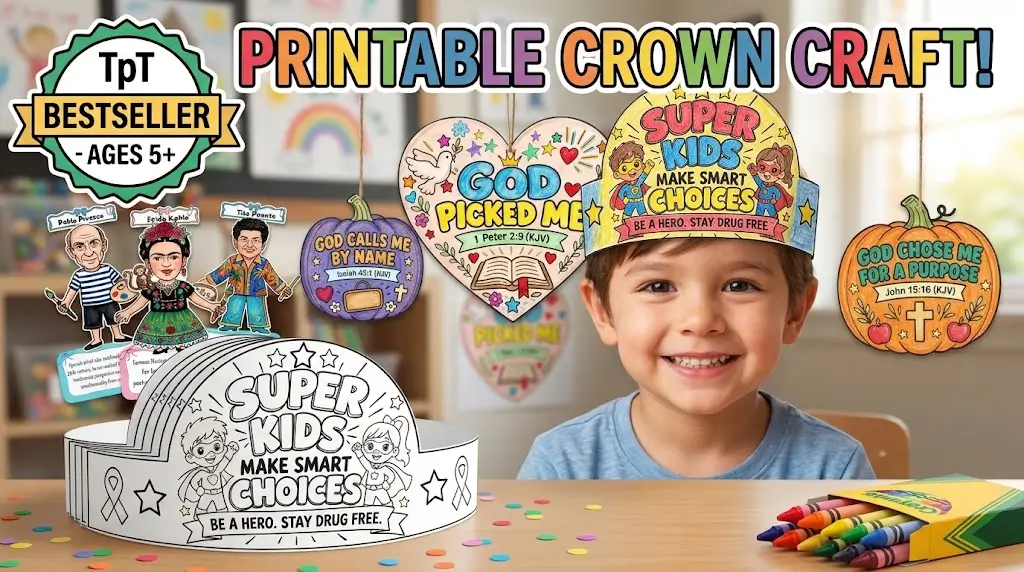
1. Red Ribbon Week Crown Craft Printable Hat
- Target Skill: Scissor control, coloring texture, and headband assembly.
- Why It Works: Cutting along curved craft borders strengthens hand muscles while creating a wearable reward kids love showing to parents.
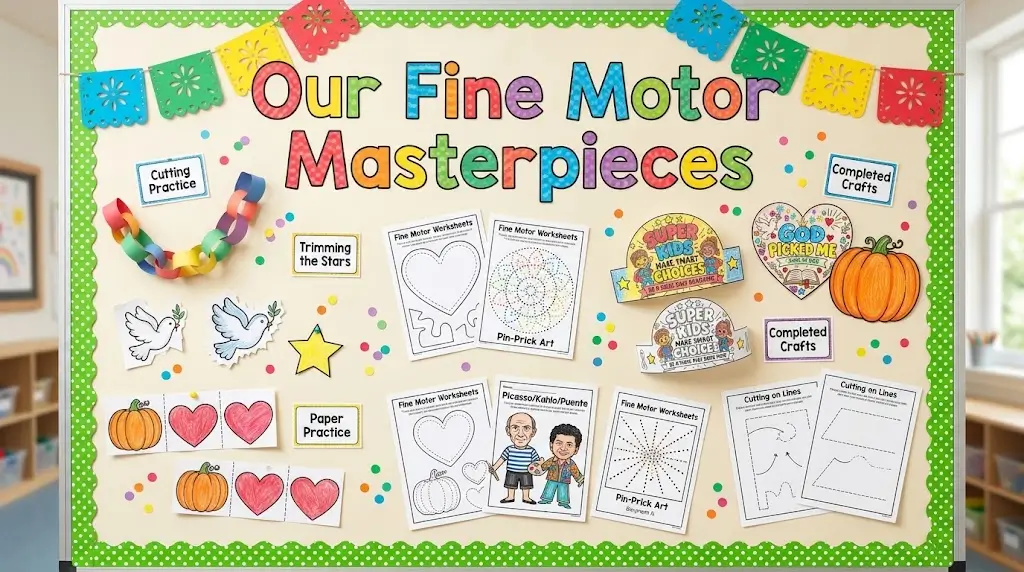
2. Hispanic Heritage Month Bulletin Board Banner Project
- Target Skill: Precision cutting, collaborative coloring, and spatial assembly.
- Why It Works: Combining individual cutting sheets into a large classroom banner builds fine motor precision and teamwork.
3. 100th Day of School Glasses & Crown Craft Activity
- Target Skill: Delicate scissor skills, hole punching, and pincer grip alignment.
- Why It Works: Crafting paper glasses requires precise interior cuts, making it an excellent advanced activity for fine motor skills worksheets rotations.
4. Fall & Autumn Leaf Handprint Craft Templates
- Target Skill: Sensory palm isolation, placement accuracy, and line tracing.
- Why It Works: Combines sensory tactile paint play with structured paper boundaries to refine motor control.
5. God Picked Me Bible Verse Craft
- Target Skill: Circular scissor cutting, brad fastener placement, and rotation coordination.
- Why It Works: Assembling interactive wheel crafts strengthens fine motor dexterity and bilateral hand use.
Unlock Your Child’s Full Potential Through Purposeful Play
Transform everyday learning into an inspiring, joy-filled adventure! As educators and parents, we know that every small breakthrough builds a child’s lifelong confidence. Incorporating energetic gross motor activities for preschool lays the essential foundation by building core stability and posture control. Pair this active movement with targeted scissor skills practice printables to refine delicate hand control, grip strength, and spatial awareness.
When you integrate bilateral coordination tracking sheets into your daily routine, you give young learners the exact tools they need to bridge left-right brain connections, accelerate handwriting readiness, and make early learning feel effortless, empowering, and truly magical.
Pincer Grip Builders & Scissor Control
Mastering scissor control requires precise bilateral coordination the ability to hold and turn the paper with one hand while controlling the cutting motion with the other. Integrating fine motor skills worksheets with varied cutting paths builds confidence:
- Straight Cutting Lines: Establishes basic open and close hand rhythm.
- Curved & Zig-Zag Paths: Demands wrist adjustment and spatial awareness.
- Complex Craft Outlines: Combines cutting precision with artistic coloring.
Studies published in the Journal of Early Childhood Research emphasize that early exposure to bilateral cutting tasks speeds up cognitive brain mapping. Read the peer-reviewed paper on SAGE Journals – Early Childhood Research.
If you are setting up your overall classroom structure, don’t forget to check our complete guide on Preschool Activities & Classroom Routine Hacks to streamline your weekly lesson plans!
Two-Handed Activities and Simple Tracing Practice
Offer activities that let children use both hands together, such as holding paper steady while drawing, folding a sheet, or assembling a paper craft. Begin with a simple task, demonstrate it first, and adjust the level of adult support to each child.
Two-handed tracing can be offered as an optional drawing activity. Avoid presenting it as a proven brain-training exercise, and simplify the task if the child finds it frustrating.
Summary Table: Integrating Motor Skills in Classrooms
| Activity Center | Physical Focus Area | Printable Resource | Primary Skill Developed |
| Cutting & Craft Station | Fine Motor / Scissor Skills | Fine Motor Skills Worksheets | Bilateral Coordination |
| Sensory Dough Corner | Fine Motor / Hand Strength | Playdough Mats | Tripod Grip Strength |
| Movement & Brain Breaks | Gross Motor / Balance | Movement Cards | Core Stability & Balance |
| Simple Tracing Station | Fine Motor / Hand Control | Tracing Sheets | Following a Path |
Frequently Asked Questions (FAQ)
What age should children begin using fine motor skills worksheets?
Children can start with basic dot-marker pages and large finger-tracing paths around age 2.5 to 3. As their hand strength and spatial control improve, introduce scissor cutting strips and fine motor skills worksheets between ages 4 and 5.
How do gross motor activities support fine motor development?
Gross motor stability provides the foundation for fine motor control. Strong core muscles, shoulder stability, and postural balance allow children to sit upright at a desk comfortably, freeing their hands and wrists to complete fine motor skills worksheets with precision.
Can these printables be used for occupational therapy (OT)?
These printables are educational activities, not a validated occupational therapy program. An occupational therapist may choose or adapt individual activities to suit a child’s assessed needs. If your child receives therapy, ask their therapist which activities, tools, and adaptations are appropriate.