It is a gray afternoon in late October. A kindergartner holds a rust-colored leaf up to the window, a four-year-old announces that she is thankful for “the dog and the dog’s blanket,” and a Sunday school teacher wonders how to turn a table of fall decorations into something children will remember. Gratitude activities for kids begin in small moments like these, when an adult helps children notice something good and put it into words, pictures, or actions.
Table of Contents
This guide shares ten ideas, a five-minute routine, and advice for keeping thankfulness sincere. Everything uses ordinary supplies and works at home, in homeschool, or in a Christian classroom or Sunday school.
What Are Gratitude Activities for Kids?
They are short, hands-on ways to help children notice good things, name them, and show appreciation to others.
In words a four-year-old can use, gratitude means noticing something good and feeling glad about it. Sometimes you tell someone “thank you.” Sometimes you just smile at a warm blanket. Christian families may also thank God, and prayer fits several activities below; the rest adapt to any setting.
Why Families and Teachers Add Gratitude to Fall Learning
Fall gives adults a built-in reason to slow down and look around: leaves change, harvests come in, and families gather. That makes it a natural time for Thanksgiving activities for kids that also practice early skills. Drawing, conversation, and card writing give children chances to practice hand control, listening, and early writing. Those are opportunities, not guaranteed results.
The research is more cautious than many holiday posts suggest. A 2014 commentary in School Psychology Review noted that a tested gratitude curriculum worked with 8- to 11-year-olds, and its authors predicted it would be less effective with younger children. They described gratitude as associated with well-being and stronger relationships, and they raised the possibility that pressuring children to express gratitude could backfire. In practice, that means treating gratitude activities for kids as invitations: short, playful, and optional.
Before You Begin: Room for Every Family and Every Feeling
A few guardrails keep gratitude activities for kids welcoming to everyone:
- Not every family celebrates Thanksgiving. These activities work any time in fall, so call it “thankful week” if that fits better.
- Sharing is optional. Always allow “pass,” and say “the people who take care of you” rather than assuming a particular family shape.
- Sad and thankful can sit side by side. Never ask a child to be thankful instead of sad, worried, or disappointed.
- Gratitude is not a history lesson. These activities are about noticing good things now. If you also teach the holiday’s history, use accurate sources. The Smithsonian’s National Museum of the American Indian offers guidance on teaching Thanksgiving that encourages bringing Native voices into lessons and points to Native peoples’ ongoing traditions of giving thanks. Skip costumes and “Pilgrims and Indians” play.
- Prayer is optional. Christian families can add it; other settings can skip it.
Ten Gratitude Activities for Kids to Try This Season
Each idea lists supplies, steps, a sample prompt, and an adaptation. Adults should handle scissors and hole punches, and small loose items such as buttons or beads are not suitable for children who still mouth objects. Crayons or colored pencils are all the color you need.
1. Three-Things Gratitude Drawing
Materials: Paper folded into three sections, crayons or colored pencils.
How: Ask the child to think of three good things from today and draw one in each section. Then invite them to tell you about each picture.
Try asking: “What made today a little better?” A child might answer, “My brother shared his crackers.”
Adapt: Preschoolers can draw one thing while an adult labels it. Second graders can add a sentence that begins with “because.”
2. Thankful Leaf Display
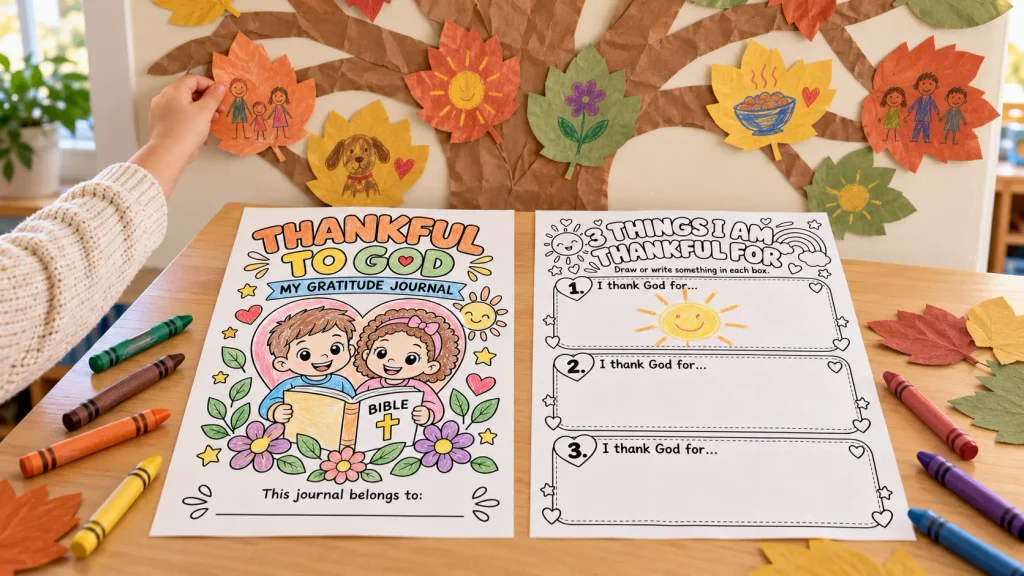
Materials: Paper leaf shapes (adult-cut or traced from real leaves), crayons, tape, and a wall or a bare branch in a vase.
How: Each child decorates a leaf and says or writes what they are thankful for. Add leaves over several weeks so the tree grows fuller. For more hands-on drawing and craft ideas, browse our arts and crafts activities.
Try asking: “What would you put on a leaf for someone who helped you?” A child might say, “I’m thankful for my teacher because she helps me tie my shoes.”
Adapt: For younger children, use large leaves and write their words for them.
3. Family Appreciation Page
Materials: Paper, pencils or crayons.
How: The child draws the people who care for them, such as parents, grandparents, foster parents, siblings, guardians, or church family, and finishes the sentence “I’m glad you ___.”
Try asking: “What does this person do that helps you feel safe?” A child might say, “Grandpa makes pancakes on Saturdays.”
Adapt: Let children choose who to include or skip the page. Older children can write a short paragraph.
4. Thank-You Card for a Helper
Materials: Folded paper, crayons.
How: Pick someone who helps the child: a bus driver, librarian, custodian, crossing guard, nurse, or pastor. The child draws, adds a message, and delivers the card by hand.
Try asking: Offer the frame “Thank you for ___. It helps me ___.” A child might write, “Thank you for waving every morning. It helps me feel brave.”
Adapt: A scribbled drawing counts as a real card, with an adult adding one line the child dictates.
5. Fall Noticing Walk
Materials: Comfortable shoes. Nothing else is required.
How: Walk around the yard, block, church grounds, or playground and look for five things: a color, a sound, a smell, something soft, and something that makes you smile. Stop to name each one. It is one of the simplest fall activities for kids.
Try asking: “What did you notice that you would miss if it were gone?” A child might say, “The crunchy leaves under my boots.”
Adapt: On rainy days, stand at a window. For children with limited vision, focus on sounds and textures.
6. Gratitude Conversation Basket
Materials: A basket or jar and paper slips with questions, or pictures for children who are not reading yet.
How: Keep it at the dinner table, in the car, or at circle time. Each person draws a slip and answers or says “pass.” Of the ten gratitude activities for kids here, it is the easiest to repeat.
Try asking: “Who helped you today?” or “What smell makes you happy?” A child might answer, “The bread smell at Grandma’s.”
Adapt: Use picture slips (a sun, hands, a plate) for preschoolers. Add “What was hard, and what helped?” for older children.
7. Simple Thanksgiving Journal Routine
Materials: A stapled paper booklet or notebook, pencil, crayons.
How: A few times a week in November, spend five minutes writing or drawing one entry. A page does not need to be filled. This is where Thanksgiving writing activities fit most comfortably, and a gratitude journal for kids can be as plain as folded paper.
Try asking: “Today I noticed ___.” A child might write, “It was hard when I missed the bus. It helped when my friend saved me a seat.”
Adapt: Preschoolers dictate one line. Older children write two or three sentences.
8. Thankfulness Into Kindness
Materials: Paper, crayons, and whatever the chosen act needs.
How: Start with thanks, then choose one small kindness in return: a picture for a neighbor, setting the table, tidying a shared shelf, or sorting donated canned food with an adult. The thought is, “Someone was kind to me, so how can I be kind?” In Christian settings, our Fruit of the Spirit coloring pages and Bible crafts pair well with conversations about kindness.
Try asking: “Who helped you this week, and how could you help someone else?” A child might say, “My neighbor waves at me, so I’ll draw her a picture.”
Adapt: Preschoolers do one act together with an adult. Older children can track a seven-day kindness list.
9. A Short, Optional Prayer Activity
Materials: Paper, crayons.
How: Trace the child’s hand. On each finger, the child draws, or an adult writes, one thing to thank God for. Then an adult or child prays, “Thank you, God, for ___.” Children may listen quietly instead of speaking. Two Bible passages about giving thanks, Psalm 107:1 and 1 Thessalonians 5:18, can be read aloud first. These thankful to God activities suit Christian Thanksgiving activities at home and Sunday school Thanksgiving activities.
Try asking: “What would you like to thank God for?” A child might pray, “Thank you, God, for my cat, my mom, and the rain.”
Adapt: Leave room for honest prayers, such as “God, today felt hard. Thank you that you are with me.”
10. Collaborative Classroom Gratitude Book
Materials: One sheet per child, crayons, a hole punch and yarn (or a stapler), and a cover page.
How: Each child completes a page that begins “I am thankful for ___” with a drawing. An adult binds the pages, reads the book at circle time, and lets families borrow it. Among group-friendly gratitude activities for kids, this one leaves a keepsake. At home, siblings or cousins can make one for grandparents.
Try asking: “What would you like our class to know?” A child might say, “I’m thankful for my friend Eli who sits with me at snack.”
Adapt: Add a page each week, and leave out last names if the book will be shared outside the classroom.
Adapting the Activities by Age
The same gratitude activities for kids can stretch across ages with small changes, and most double as Thanksgiving activities for preschoolers. This table helps with mixed-age groups.
| Activity | Preschool (about 3–4) | Kindergarten (about 5–6) | Early elementary (about 6–8) |
|---|---|---|---|
| Drawing (1, 3) | Draw one thing; adult labels it | Draw two or three things; add a word | Add a “because” sentence |
| Thank-you card (4) | Draw; adult writes the child’s words | Copy a sentence frame | Write a personal message |
| Conversation basket (6) | Picture slips, one answer | Simple questions, take turns | Add follow-up “why?” questions |
| Journal (7) | Dictate one sentence | One sentence plus a drawing | Two or three sentences |
| Prayer (9) | Adult leads a one-line prayer | Child names one thing to thank God for | Child writes or leads a short prayer |
A Five-Minute Gratitude Routine
No time for all ten gratitude activities for kids? Try this rhythm two or three times a week:
- Notice (one minute). Look around the room or out the window for one good thing.
- Share (one minute). Each person says what they noticed. Passing is welcome.
- Draw or write (two minutes). A quick picture or sentence in a journal or on scrap paper.
- Close (one minute). Offer a short prayer in Christian settings, or say “thank you” to the group.
It fits morning circle, homeschool morning time, a Sunday school opening, or the end of dinner. Short thankfulness activities for kids are easier to repeat.
Support for Children Who Are Not Writing Yet
Children can take part fully without holding a pencil. They can draw, dictate to an adult, trace over a sentence an adult writes, choose from picture cards, or tell a partner. Write exactly what the child says, and let the drawing be the main response. Gratitude activities for preschoolers work best when talking comes first and paper comes second. A single word such as “dog” is a complete entry.
How to Keep Gratitude Activities for Kids Sincere
In Raising a Thankful Child, NAEYC separates saying thank you as a social script from actually feeling thankful, and encourages adults to model real appreciation and help children make their own meaning. A few ways to put that into practice:
- Accept honest answers. “Pizza” and “puddles” count, and so does “I don’t know yet.”
- Model it. “Thank you for helping me fold laundry. It made the job faster.”
- Reflect back. “You used so many colors on this card. I can tell you worked hard.”
- Skip comparisons. Avoid “be thankful because other kids have less.”
- Welcome hard days. An entry about a rough day belongs in a journal too.
A Printable Option for Christian Homes and Classrooms
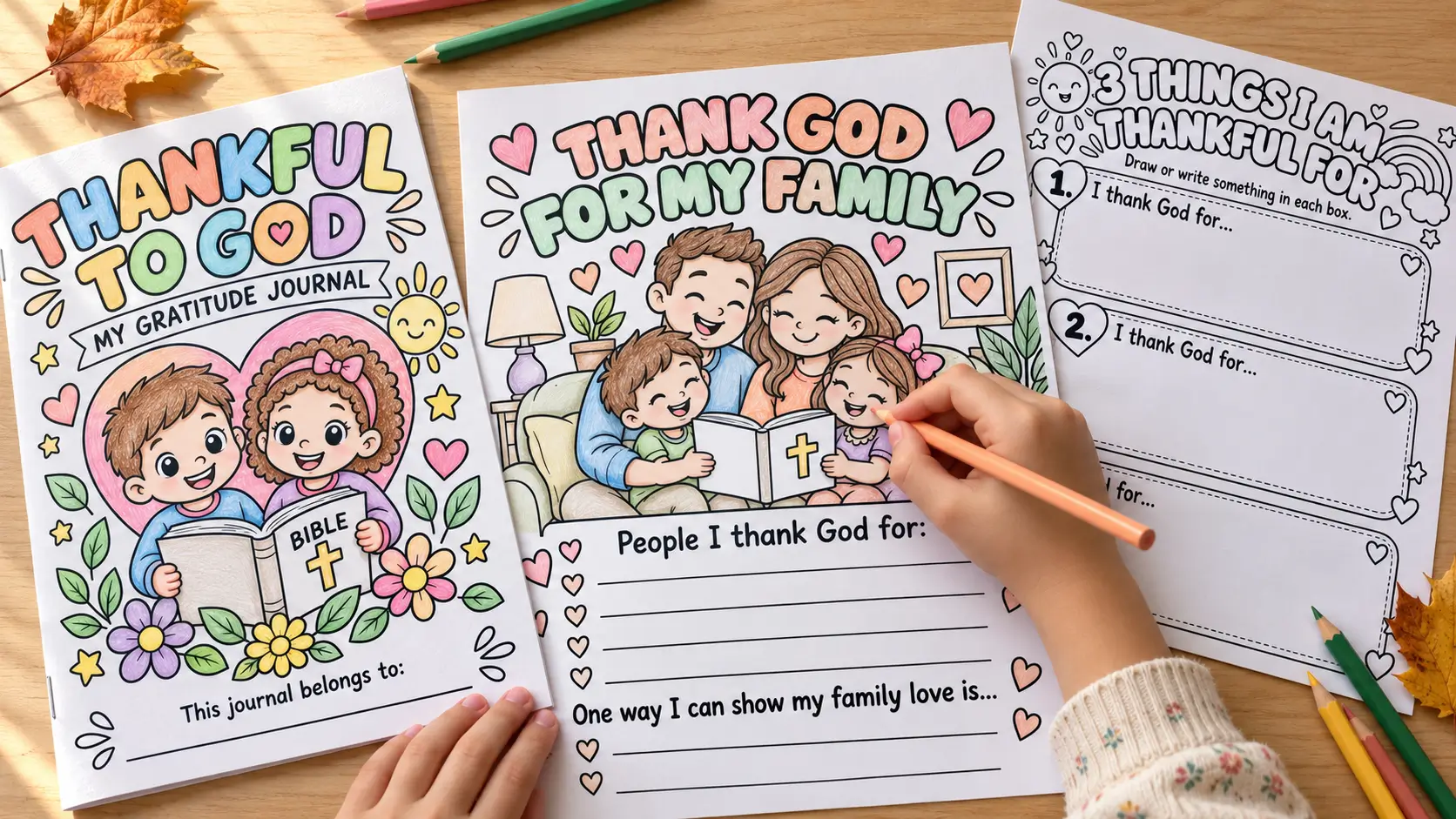
If you want ready-made pages to support the gratitude activities for kids above, Thankful to God: My Gratitude Journal is a black-and-white printable journal for coloring and writing. It has a personalized cover, a “This Journal Belongs to Me!” page, a “How to Use My Journal” page with think, write, draw/color, and pray steps, a “3 Things I Am Thankful For” page with three response boxes, and a “Thank God for My Family” page with reflection lines and a prompt about showing family love.
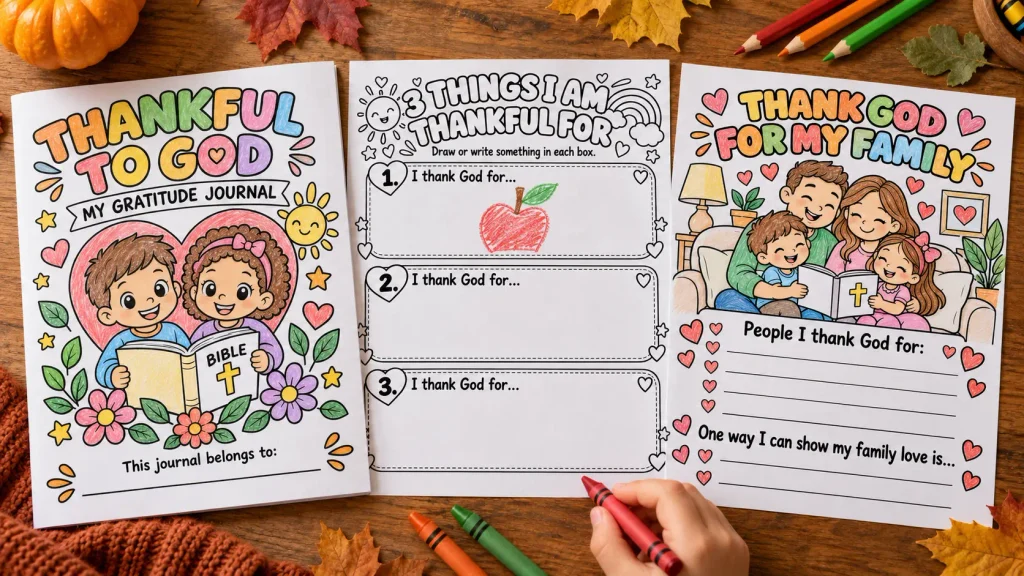
The seller’s listing describes a non-editable PDF with 30 activity pages, suggests Kindergarten through Grade 2, and notes that beginning writers may need an adult’s help. You provide the pencils or crayons, and none of the activities above require the journal.
Continuing Gratitude Beyond Thanksgiving
A routine that ends on Thanksgiving Day teaches less than one that quietly continues. Keep the conversation basket for Friday dinners. Turn the leaf tree into a winter tree by adding snowflake shapes. Write thank-you notes after birthdays and holidays. Repeat the noticing walk each season. In Sunday school, close class with one thing each child is thankful for. For more ideas, browse our seasonal and holiday activities. Small habits like these keep gratitude activities for kids going all year.
Frequently Asked Questions
When can children start gratitude activities?
Young children can begin with noticing and naming, such as “I like the warm sun.” Understanding grows with age, so keep early gratitude activities for kids simple and let older children add reasons and writing.
What if our family does not celebrate Thanksgiving?
Use the activities as fall or year-round routines instead. Noticing walks, helper cards, and conversation baskets do not need a holiday at all.
What if a child feels sad, worried, or says there is nothing to be thankful for?
Listen first. You might say, “That sounds hard. Would you like to draw how you feel?” Offer the “What was hard, and what helped?” prompt, or let the child pass. Gratitude should not erase real feelings. If sadness lasts or worries you, talk with a pediatrician, counselor, or pastor.
How long does each activity take?
Roughly 10 to 20 minutes for most. The basket and routine are shorter, and the classroom book works well spread over a few days.
Do I need to buy anything?
No. Paper, crayons or colored pencils, tape, and a basket cover every one of these gratitude activities for kids. The printable journal and the optional section below are conveniences, not requirements.
Final Thoughts
Gratitude does not need a big production. Choose one of these gratitude activities for kids, try it this week, and listen to what your children say. If you would like printable pages for a Christian setting, see the Thankful to God journal listing on Teachers Pay Teachers.
Choose gratitude activities for kids that fit moments your family already shares, such as breakfast, an afternoon walk, or bedtime. Keep a small basket of paper and crayons nearby so gratitude activities for kids are easy to begin without extra preparation. At school, gratitude activities for kids can become a weekly drawing prompt or a short partner conversation about someone who helped. Repeat favorite gratitude activities for kids throughout November, allowing children to draw, write, speak, or pass depending on how they feel.
Optional Supplies and Appreciation Gifts
This section contains affiliate links. If you purchase through them, we may earn a commission at no extra cost to you. As an Amazon Associate I earn from qualifying purchases.

For a separate decorative craft you plan on your own, the ARTISTRO acrylic dual-tip marker set is one optional tool. It is not needed for the activities or the journal pages, where crayons or colored pencils are the basic supplies. Check its listing for age and surface guidance.
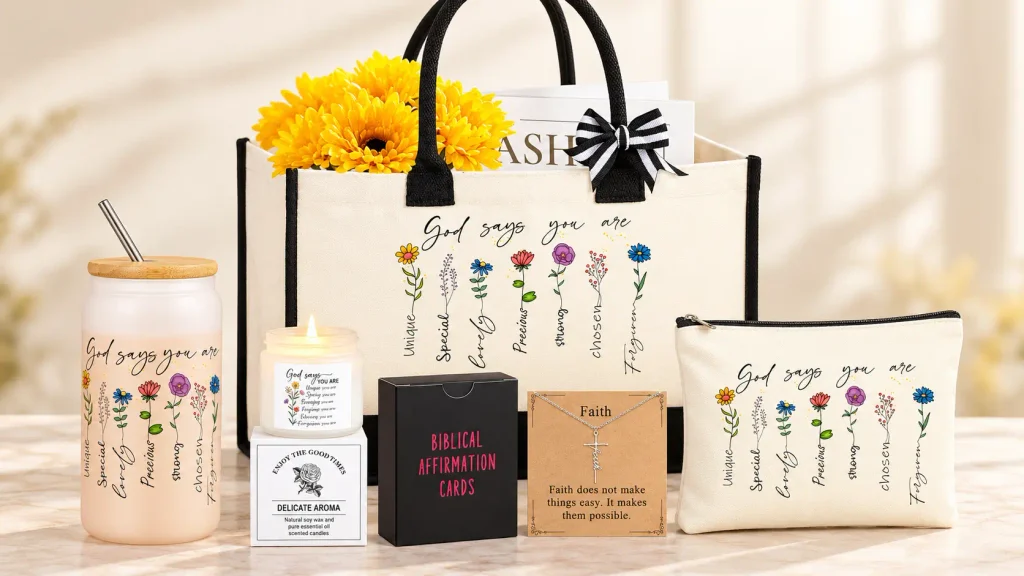
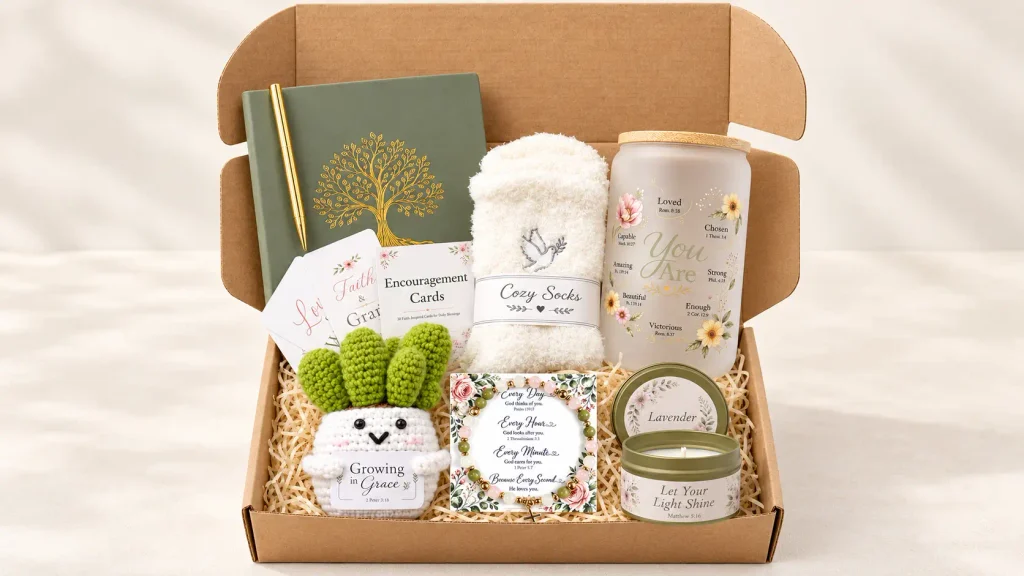
Adults who run fall activities deserve thanks too. For a mother, teacher, or caregiver, two Christian gift listings marketed for women are the DOGMEM Christian gift listing and the LUICONMO Christian gift listing. They are adult gifts, not children’s learning materials, so read each description to see what is included.