

Beyond Pink Ribbons – The Evolving Science of Breast Cancer
This article is intended for adult readers seeking general breast cancer awareness information. It is not a classroom lesson for preschool children and does not provide personalized medical advice. Questions about symptoms, screening, genetic testing, or treatment should be discussed with a qualified healthcare professional.
This breast cancer awareness guide introduces five topics for adult readers: breast density, breast cancer in men, liquid biopsy research, the gut microbiome, and breast changes that deserve medical attention.
The aim is to explain these topics in accessible language, distinguish ongoing research from established care, and point readers toward reliable sources. The guide also includes practical ways families and educators can show kindness while respecting personal health information and privacy.
Table of Contents
Understanding Breast Cancer Types
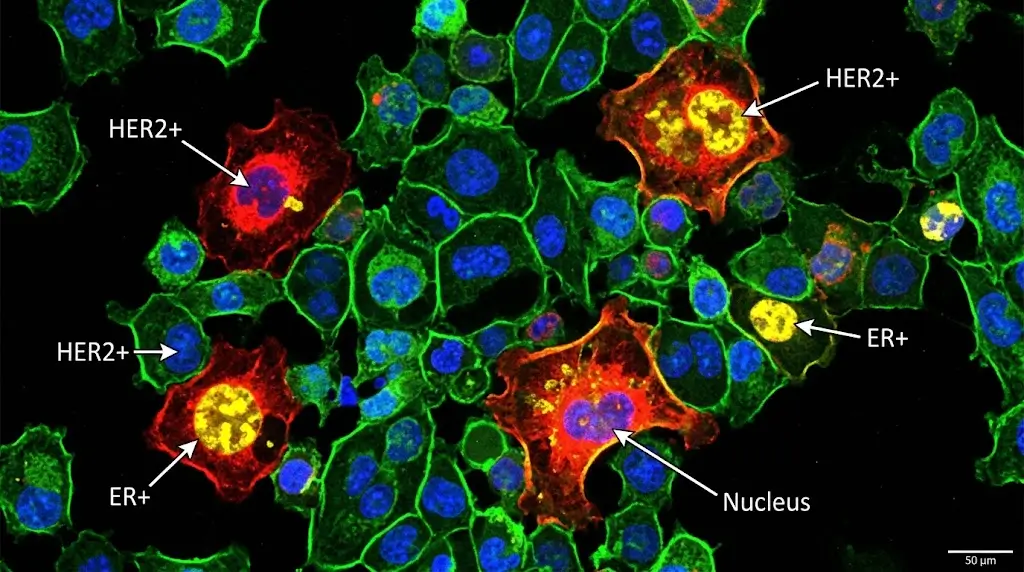
Breast cancer includes different types of disease. Tests on a tissue sample can help identify features such as estrogen receptors, progesterone receptors, and HER2 status. The oncology team considers these results alongside other information when discussing care.
This guide does not interpret individual test results or recommend treatments. For further information, visit the National Cancer Institute’s breast cancer information hub.
5 Breast Cancer Awareness Topics for Adult Readers
1. Dense Breast Tissue Awareness & Diagnostic Challenges
Dense breast tissue can make breast cancer harder to detect on a mammogram. Breast density is assessed through mammography, not by breast size or how the breasts feel. If your report mentions dense breasts, discuss your overall risk and screening options with your healthcare professional. Additional imaging is not automatically needed for everyone; it can detect more findings but may also lead to false alarms and further testing. Learn more from the National Cancer Institute’s guide to dense breasts.
2. Breast Cancer Can Also Affect Men
Men can develop breast cancer because they also have breast tissue. Although it is uncommon, a new breast lump, nipple changes, unusual discharge, or skin changes should be assessed by a healthcare professional. These symptoms can also have noncancerous causes.
Family history and inherited changes in genes such as BRCA1 or BRCA2 can affect risk. Anyone concerned about their personal or family history can discuss it with their healthcare team. Learn more from the National Cancer Institute’s guide to breast cancer in men.
3. Liquid Biopsies & Circulating Tumor DNA (ctDNA)
Liquid biopsies are blood tests that can look for tumor-related material, including circulating tumor DNA (ctDNA). Researchers are studying whether these tests can help detect residual disease after treatment for early-stage breast cancer and guide further care. Detecting a signal earlier does not, by itself, prove that changing treatment will improve outcomes. Patients should discuss any proposed test with their oncology team. Explore an example of this ongoing research through the National Cancer Institute’s clinical trial information.
4. The Gut Microbiome: An Area of Ongoing Research
Researchers are studying how gut microorganisms may relate to breast cancer biology and responses to treatment. These findings should not be interpreted as proof that a particular diet, probiotic, or microbiome test can prevent or treat breast cancer. Patients considering supplements during treatment should discuss them with their oncology team. Learn about this research through the National Cancer Institute’s information on a breast cancer microbiome study.
5. Breast Changes That Deserve Medical Attention
Breast cancer does not always cause a noticeable lump. Other possible signs include a new change in breast size or shape, skin dimpling, a nipple that newly turns inward, unusual nipple discharge, or swelling near the armpit.
These changes can also have noncancerous causes. They cannot confirm a diagnosis on their own, but new or unusual changes should be checked by a healthcare professional—even after a recent normal mammogram. Learn more from the National Cancer Institute’s guide to breast cancer signs and symptoms.
Supporting Families Through Kindness and Connection
The suggestions below focus on practical gestures of kindness and respect for each family’s preferences and privacy.

Simple Ways to Show Support
When a family is affected by breast cancer, ask what kind of support would be welcome rather than making assumptions. A thoughtful message, help with an everyday task, or an invitation to talk can offer a practical way to show care.
Children can participate through a drawing or a simple card, if the family welcomes it. Keep participation optional, respect the person’s privacy, and avoid asking children to share personal family health information in class. These activities are gestures of kindness, not medical or psychological treatment.

For educators and families, a simple creative activity can provide an opportunity to talk about kindness and ways to support others. For example, kindness craft crowns for preschoolers can accompany a discussion about helpful actions, such as making a card or offering encouragement. Keep participation optional and avoid asking children to share private family health information.
Understanding Breast Cancer Treatment Options
Breast cancer treatment is individualized. Options may include surgery, radiation therapy, chemotherapy, hormone therapy, targeted therapy, or immunotherapy. The appropriate approach depends on factors such as the cancer’s stage, biomarker results, previous treatment, and the person’s overall health.
New treatments are studied in clinical trials, but a treatment that benefits one group of patients may not be appropriate for another. For a clear overview, visit the National Cancer Institute’s guide to breast cancer treatment. Individual treatment decisions should be made with the oncology team.
Habits That Can Help Lower Breast Cancer Risk
Being physically active, maintaining a healthy weight, and reducing or avoiding alcohol can help lower breast cancer risk. However, no lifestyle choice can guarantee prevention, and developing breast cancer does not mean someone failed to take care of their health.
Factors such as age and inherited gene changes also affect risk. Discuss your personal circumstances and any risk-reduction options with a healthcare professional. For more information, read the National Cancer Institute’s guide to breast cancer prevention.
Frequently Asked Questions (FAQ)
How do I know if I have dense breasts, and what screening is needed?
Breast density is assessed on a mammogram and is usually described in the mammography report. Dense tissue can make cancer harder to see on a mammogram. Whether additional imaging is appropriate depends on your overall risk and individual circumstances; it is not automatically needed for everyone with dense breasts. Discuss your report and screening options with your healthcare professional. Read more in the National Cancer Institute’s guide to dense breasts.
Who should undergo BRCA genetic testing?
Whether BRCA testing is appropriate depends on factors such as your personal cancer history, family history, ancestry, and whether a harmful gene variant has already been identified in your family. A healthcare professional or genetic counselor can assess these factors and explain the benefits, limitations, and possible results of testing. Learn more from the National Cancer Institute’s BRCA genetic testing fact sheet.
What early signs require medical evaluation if no lump is present?
New breast changes such as skin dimpling, a nipple that newly turns inward, unusual nipple discharge, changes in breast size or shape, or swelling near the armpit should be checked by a healthcare professional. These signs can have noncancerous causes and do not confirm breast cancer on their own. Seek medical advice even if a recent screening mammogram was normal. Learn more from the National Cancer Institute’s guide to breast cancer symptoms.
Conclusion
This breast cancer awareness guide introduces general information and links to specialist sources for further reading. It distinguishes established information from areas of ongoing research. Discuss personal questions about breast changes, screening, genetic testing, or treatment with your healthcare team. For additional educational resources, parent-teacher guides, and classroom learning materials, explore our wider collection of educational printable crafts and activity packs.