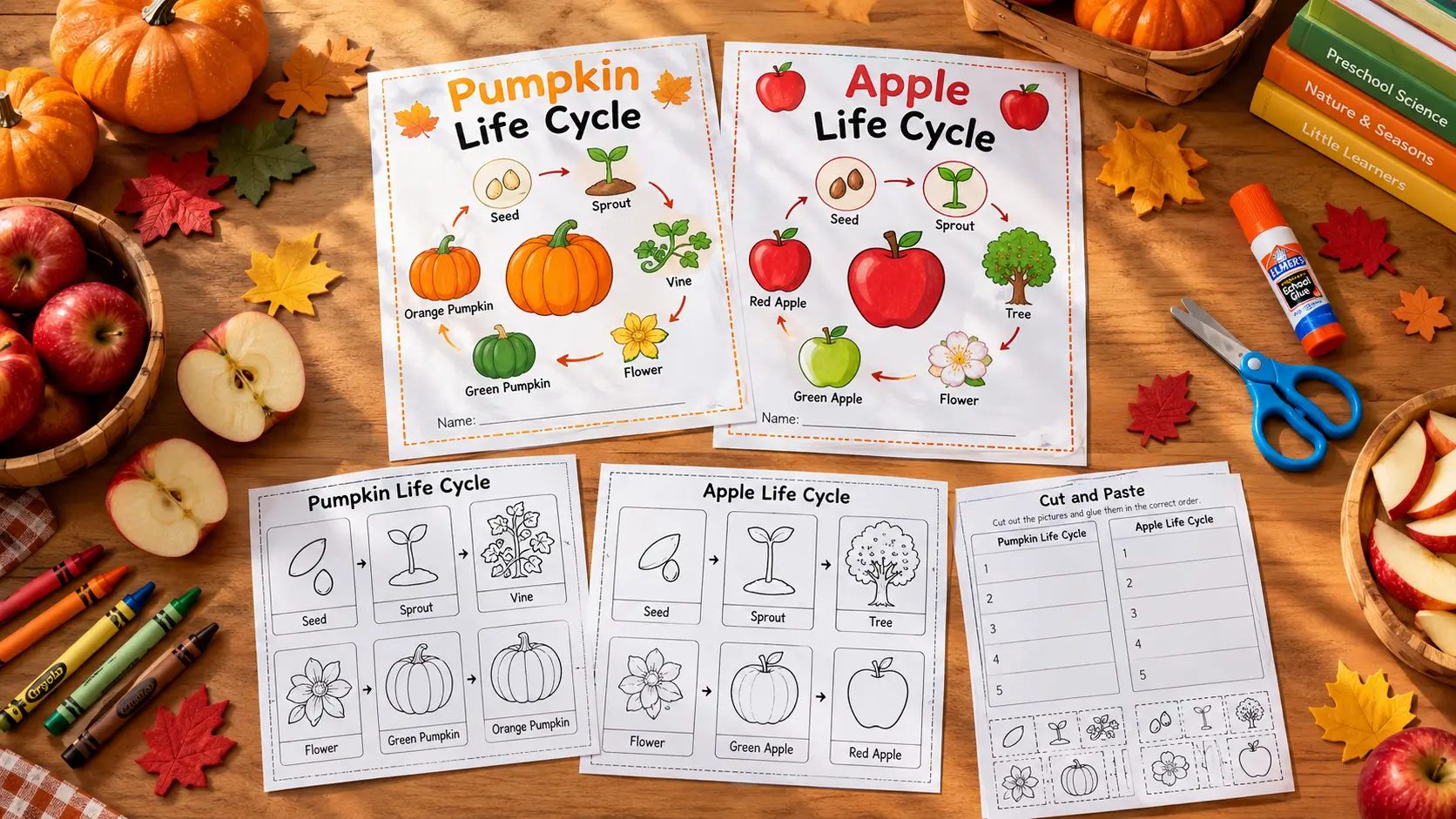
Teaching young children about botany and natural science is one of the most rewarding aspects of early childhood education. Introducing a structured preschool life cycle curriculum helps young learners understand how plants grow from tiny seeds into full-grown fruits and vegetables. By focusing on hands-on activities, coloring sheets, and sequencing crafts, educators and parents can transform abstract scientific concepts into clear, tangible visual lessons.
Understanding early botany allows children to connect seasonal changes with real living organisms. Whether you are building an autumn classroom unit or looking for engaging fall learning activities, focusing on crops like apples and pumpkins provides endless opportunities for fine motor practice, vocabulary development, and early critical thinking.
If you are looking for a comprehensive overview of early science units across various themes, explore our guide on how to teach preschool life cycles for classroom lesson plans and sequencing ideas.
Table of Contents
Why Teaching Plant Growth Stages Matters
When early childhood educators introduce plant growth units, they build foundational skills across multiple developmental domains. Science in early childhood is not just about memorizing facts; it is about exploring processes, conducting simple observations, and understanding natural progression.
Key Benefits of Early Science Lessons:
- Chronological Reasoning: Studying a preschool life cycle teaches children how steps follow a specific chronological sequence (first, next, then, finally).
- Fine Motor Skills: Activities like cutting out sequencing cards, pasting growth stages, and coloring detailed pages strengthen hand muscle control and pincer grip dexterity.
- Vocabulary Expansion: Children learn specialized plant biology terms such as germination, sprout, blossom, pollination, and harvest.
- Hands-On Engagement: Using interactive fall learning activities keeps children engaged through tactile art projects, crafts, sensory bins, and interactive coloring sheets.
Understanding how living things transform lays the foundation for future STEM concepts in kindergarten and elementary school.
Autumn Unit 1: The Pumpkin Unit
The pumpkin is a quintessential symbol of autumn. Exploring how a pumpkin grows offers an ideal springboard for early science lessons using interactive pumpkin life cycle worksheets.
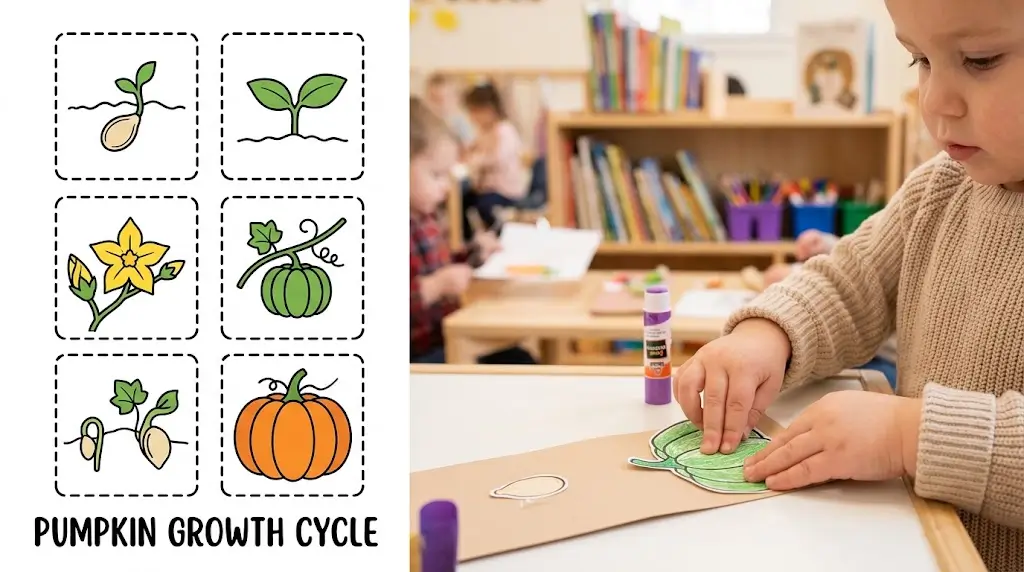
5 Growth Stages Explained for Early Learners:
- Seed: The journey begins with a small pumpkin seed buried in rich soil.
- Sprout: With water and sunlight, the seed germinates into a tender green shoot poking through the earth.
- Vine & Flower: The shoot grows long vines with large green leaves and bright yellow blossoms that attract pollinators.
- Green Pumpkin: After pollination, tiny green pumpkins form where the blossoms fade.
- Orange Pumpkin: As the pumpkin matures, it develops the color typical of its variety. Many pumpkins turn orange, while others remain white, green, or another color.
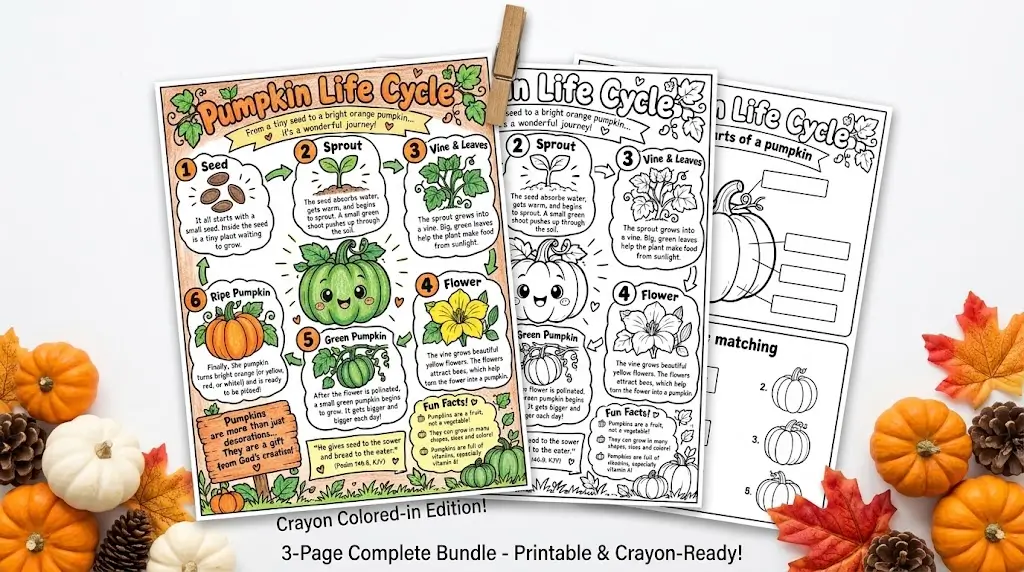
To make this lesson memorable, incorporate a faith-based coloring sheet alongside scientific sequencing sheets. Combining science with seasonal themes creates comprehensive learning units for homeschooled children and Christian school classrooms.
Be sure to check out our Pumpkin Life Cycle Worksheets & Cut-and-Paste Craft .
Autumn Unit 2: The Apple Unit
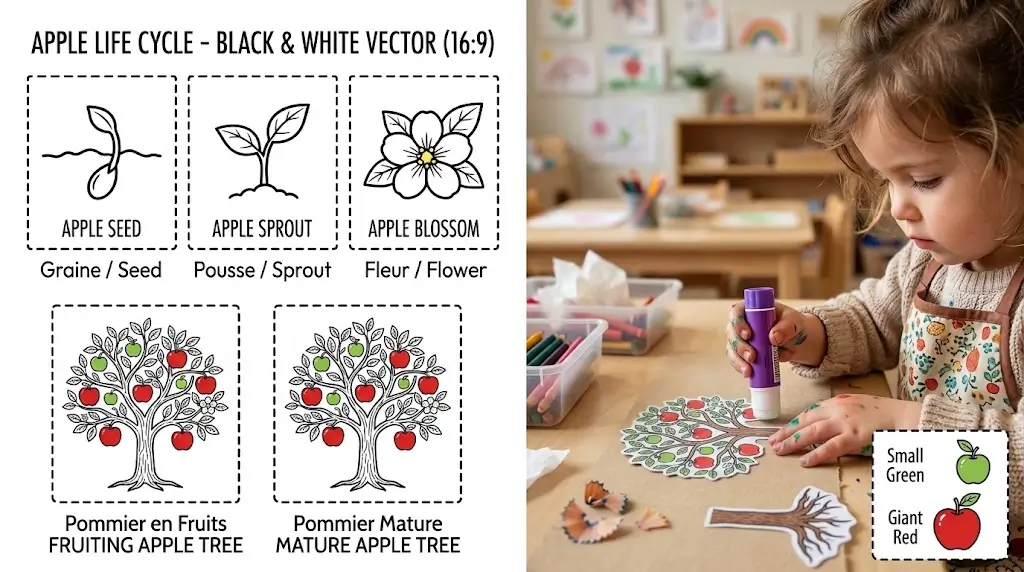
As back-to-school season starts in early fall, studying apples is a favorite theme for pre-K classrooms. Teaching plant growth through apple trees allows teachers to blend biology with early math using targeted apple life cycle worksheets.
Interactive Learning Ideas:
- Interactive Spinner Wheels: Children assemble two paper discs using a brass fastener to reveal each growth stage sequentially as the top disc turns.
- Apple Stamping Math: Cut real apples in half, dip them in washable paint, and stamp them onto numbered tree worksheets as part of your autumn math centers.
- Word Tracing Cards: Pair apple life cycle worksheets with letter tracing exercises focused on the letter A (A is for Apple).
Adding high-quality printables to your lesson plan ensures children build scissor control and vocabulary. You can download our full Apple Life Cycle Activity Pack or view our guide on Apple Stamping Crafts & 1-10 Counting Worksheets for step-by-step instructions.
7 Easy Classroom Activities to Try This Fall
Here are 7 practical ways to integrate these resources into your weekly autumn lesson plan:
- Cut-and-Paste Sequencing Sheets: Have students color the growth stages, cut out the picture cards along dotted lines, and glue them in order on a sequence strip.
- Interactive Paper Wheel Spinners: Print top and bottom wheel layers on cardstock. Let children color the pictures and assemble them using a metal brass fastener.
- Sensory Bin Seed Sorting: Fill a shallow plastic bin with dried pumpkin seeds, apple seeds, and potting soil. Provide magnifying glasses and tweezers for seed exploration.
- Apple Print Painting & Counting: Combine art and math by dipping halved apples into red, green, and yellow tempera paint to stamp exact numbers onto orchard tree sheets.
- Erupting Pumpkin Science Experiment: Hollow out a mini pumpkin, add baking soda and dish soap, and pour in vinegar to demonstrate a foamy chemical reaction.
- Vocabulary Tracing Cards: Help preschoolers practice letter formation and early phonics by tracing key words like Seed, Tree, Flower, and Fruit.
- Fall Faith & Gratitude Coloring: Incorporate a faith-based activity like a pumpkin prayer sheet to blend seasonal gratitude with fine motor coloring practice.
🛍️ Featured Printable Resources for Teachers & Parents
Enhance your preschool life cycle unit and fall curriculum with these top-rated printable activity sets available on Teachers Pay Teachers and Etsy:
🎃 Pumpkin Science & Faith Resources
- Pumpkin Prayer Coloring Page: A meaningful autumn activity blending faith and seasonal fall learning activities.
- Download on Teachers Pay Teachers or find it on Etsy.
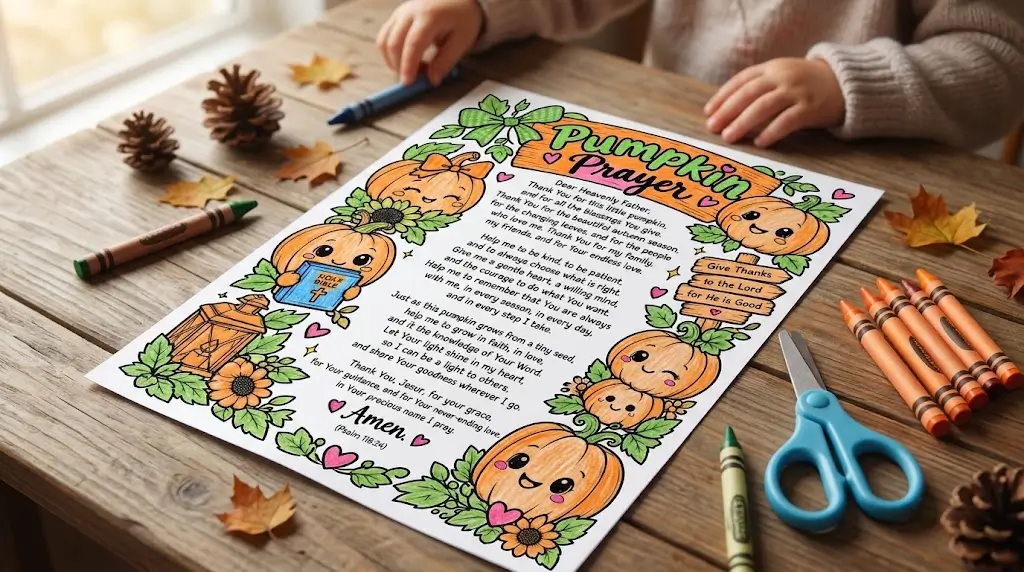
Integrating these printable resources into your daily routine saves prep time while offering high-quality fall learning activities for your students.
Frequently Asked Questions
What is the best age to start teaching early science units?
Children aged 3 to 6 years old benefit most from an introductory preschool life cycle curriculum. For younger toddlers (ages 2-3), focus on simple 3-stage sequences, while older kindergarteners (ages 5-6) can tackle 5-stage pumpkin life cycle worksheets or apple life cycle worksheets with vocabulary writing and word tracing.
How do pumpkin life cycle worksheets improve fine motor skills?
Using pumpkin life cycle worksheets requires children to hold crayons properly, cut along dotted scissor guides, and manipulate glue sticks during hands-on fall learning activities. These combined movements strengthen the intrinsic hand muscles needed for future writing.
Can I use these fall learning activities for homeschooling?
Yes! These fall learning activities, pumpkin life cycle worksheets, and apple life cycle worksheets are designed to deliver a complete early science experience in both traditional classrooms and homeschool settings. They require minimal prep—simply print and supply basic craft tools!