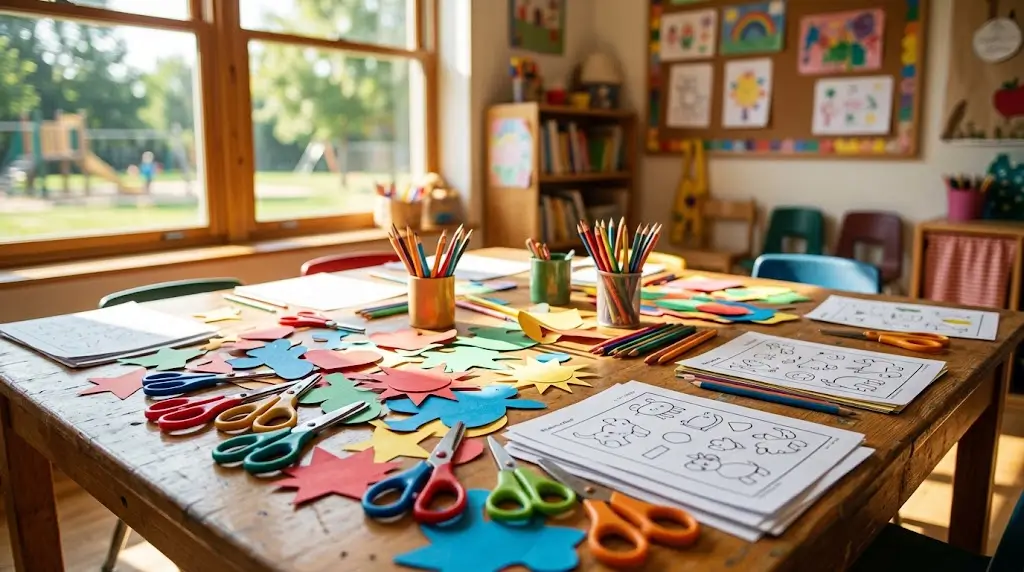
Screen-free, hands-on printables build fine motor skills, focus, and confidence in young learners, while giving busy teachers low-prep solutions that save hours every week.
Table of Contents
When Screen Fatigue Meets the Need for Hands-On Learning
Screen fatigue is real, and children, teachers, and parents are all feeling it. That is why printable learning activities for kids are having such a moment: they give young learners something to touch, cut, color, and build, while giving the adults who guide them a simple way to keep learning on track.
Walk into almost any elementary classroom or family living room today and you will see the tension. Kids spend a large part of their day on tablets, laptops, and phones. Teachers are working to meet curriculum standards without adding hours of evening prep. Parents want learning at home to feel joyful rather than like a daily battle.
This guide explains how digital printable activities bridge the gap between classroom curriculum standards and meaningful learning at home. You will discover the developmental benefits of hands-on work, why more educators are embracing printables, five easy ways to use them every day, and where to find ready to use resources from SmartPrint Kids. Whether you teach PreK–5, lead a Sunday School class, or homeschool at your kitchen table, high-quality printable learning activities for kids can help you step into the 2026–2027 school year with less stress and more connection.
Why Printable Learning Activities for Kids Are Essential in Early Childhood Development
Between the ages of three and ten, children are building the physical, mental, and emotional foundations they will use for the rest of their schooling. Hands-on tasks give them practice in all three areas at once. Here is what that looks like in practice.
Fine Motor Control: Scissors, Pencil Grip, and Coloring Within the Lines
Fine motor skills, the small, precise movements of the hands and fingers, are the quiet engine behind handwriting, zipping a jacket, and using a fork. They do not develop by accident; they develop through repeated, purposeful practice. Fine motor skill activities for preschool, such as cutting along a curved line, tracing a shape, or gluing tiny pieces into place, strengthen the muscles children later rely on for writing stamina and legible letters.
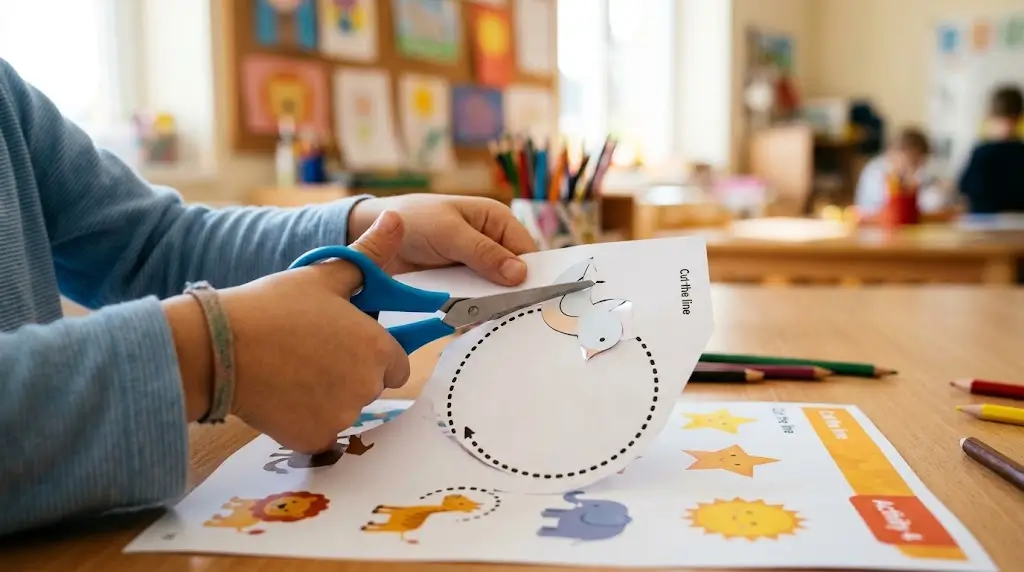
Printable learning activities for kids are especially good at this because the task is built right into the page. A dotted cutting line teaches scissor control. A coloring space with clear boundaries gives children repeated practice with an efficient pencil grip and careful hand-eye coordination. Occupational therapists and early childhood educators commonly recommend these everyday tasks because they are simple, repeatable, and easy to scale in difficulty as children grow.
Cognitive Retention and Tactile Memory: Hands-On vs. Digital Scrolling
Scrolling is fast and passive. Hands-on learning is slower and active, and that is exactly the point. When a child cuts out a vocabulary card, sorts it into a category, and glues it into place, they are making decisions, sequencing steps, and using several senses at once. Educators have long observed, and research on multisensory learning suggests, that engaging touch, sight, and movement together helps information stick.
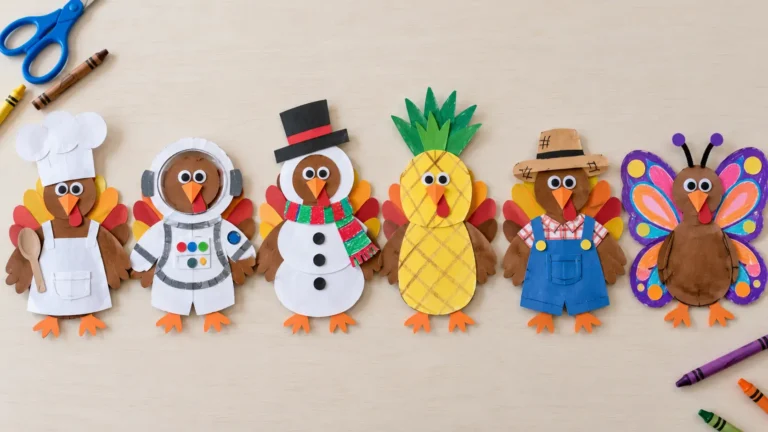
That is the heart of tactile memory: a child may not remember a swipe, but they remember the paper turkey they built and the feathers they labeled. Well-designed printable learning activities for kids turn abstract concepts into physical experiences, giving young learners more than one way to hold onto what they have learned.
Social-Emotional Learning and Mindfulness: Calming Quiet Stations
Not every learning moment needs to be loud. A quiet coloring or craft station gives children a calm, predictable activity they can settle into, which supports focus, self-regulation, and a sense of accomplishment. Craft-based printables with themes like kindness, gratitude, and teamwork add a character-building layer, helping children practice empathy while their hands stay busy.
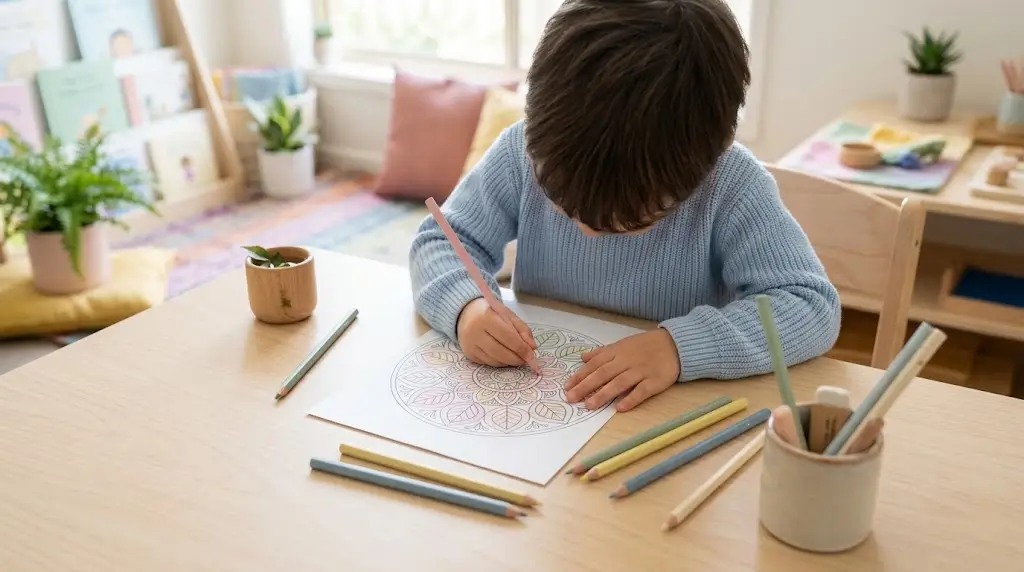
For families, these are some of the most practical screen-free learning resources for parents: a printed page, a box of crayons, and ten peaceful minutes of focus. No batteries, no passwords, and no pop-up ads.
Why Teachers and Parents Are Switching to Digital Printables
A digital printable is a downloadable file, usually a PDF, that you print at school or at home whenever you need it. That simple model is changing how adults plan learning. Instead of waiting for a shipped kit or building materials from scratch, you can download, print, and teach within minutes.
Benefits for Teachers
Digital printables for teachers solve some of the biggest pain points in the profession:
Time-saving prep: A finished, ready to print resource replaces hours of designing, drawing, and formatting.
Instant download: Need an activity for tomorrow morning? Purchase tonight and print before the bell.
Print-as-needed flexibility: Print one copy for a center or thirty for the whole class, and reprint when pages go missing.
Budget-friendly value: One purchase can serve multiple classes and school years, and you only spend on the paper and ink you actually use.
Teaching is demanding enough without spending Sunday night cutting out pieces by hand. When printable learning activities for kids are designed well, they free teachers to spend less time preparing and more time doing what matters most: connecting with students.
Benefits for Parents
Parents do not need a teaching degree to make learning meaningful. Printables make it easy to:
Plan low-prep weekend activities: Print a craft on Friday and enjoy a creative Saturday morning together.
Supplement homeschooling: Add hands-on practice to math, literacy, or seasonal units without buying a full curriculum.
Offer engaging quiet-time alternatives: A cut-and-glue project can fill a rainy afternoon at the table instead of another round of cartoons.
The best screen-free learning resources for parents are simple, flexible, and ready when you are. A printable fits all three.
Featured Hands-On Learning Resources from SmartPrint Kids Store
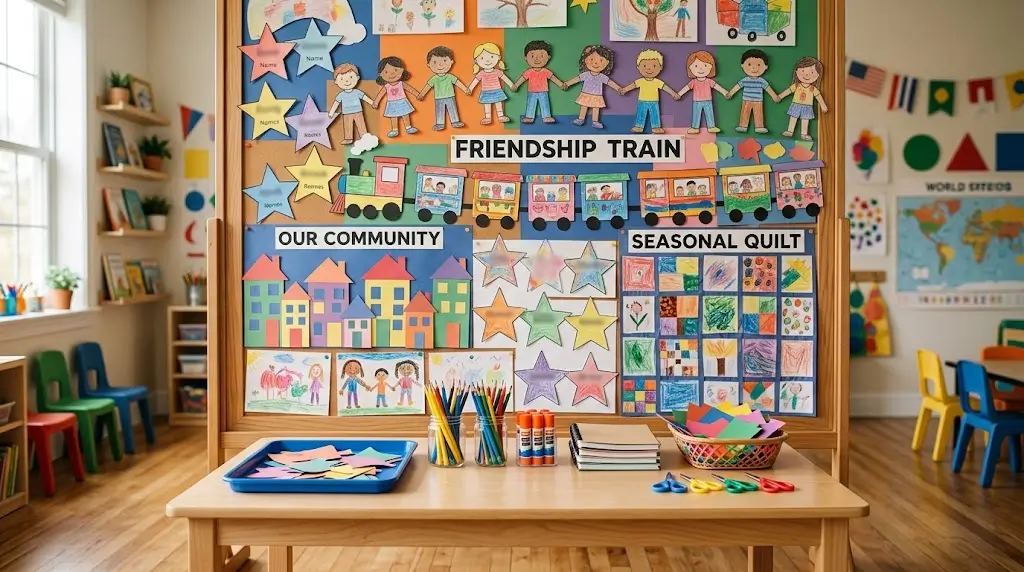
If you are ready to try printables, the SmartPrint Kids Store on Teachers Pay Teachers offers classroom-ready resources built around creativity, character, and hands-on learning. Here are three types of resources worth exploring, along with ideas for using each one. All three are examples of printable learning activities for kids that are easy to prep and meaningful to complete.
Feature 1: Collaborative Classroom Posters and Banners
Looking for a project that builds teamwork and brightens the hallway at the same time? SmartPrint Kids offers collaborative poster and banner resources, including seasonal options such as a Red Ribbon Week banner and a Día de los Muertos banner. Students each color or decorate a section, then the class joins the pieces into one finished display.
These projects are perfect for teamwork, hallway decor, and class unity. Every child contributes something visible, which builds a sense of belonging, and the coloring and cutting along the way double as fine motor practice. Explore these designs directly at the SmartPrint Kids TPT Store.
Feature 2: Craftivities and Fine Motor Cut-and-Glue Kits
Craftivities combine an art project with a learning goal, and they are a classroom favorite for good reason. The Kindness Is My Superpower Craftivity is a great example, pairing glue control and scissor skills with character building. Children practice the careful, small movements that strengthen their hands while reflecting on what it means to be a kind friend. Cut-and-glue kits like this one also work as fine motor skill activities for preschool and kindergarten.
Low prep classroom crafts like this are ideal for busy weeks: print, pass out supplies, and let students create. Use one as a Monday morning kickoff, a companion to a lesson on positive behavior, or a display for family night. Find more options at the SmartPrint Kids TPT Store.
Feature 3: Faith-Based and Seasonal Scripture Crafts
For Christian classrooms, homeschool families, and children’s ministry, SmartPrint Kids also offers faith-based seasonal resources, including the Christian Thanksgiving Thankful Turkey and Bible activity packs. These are ideal for Sunday School teachers, Christian schools, and ministry volunteers who want meaningful lessons without hours of preparation.
Hands-on Sunday School crafts like these pair a memorable project with a Scripture-based lesson on gratitude. Children leave with more than a paper turkey: they leave with a tangible reminder to give thanks that they can carry home and share with their families. Browse the full faith based collection at the SmartPrint Kids TPT Store.
Ready to see everything available? Browse the full free collection at the SmartPrint Kids TPT Store.
5 Creative Ways to Implement Printable Activities Daily
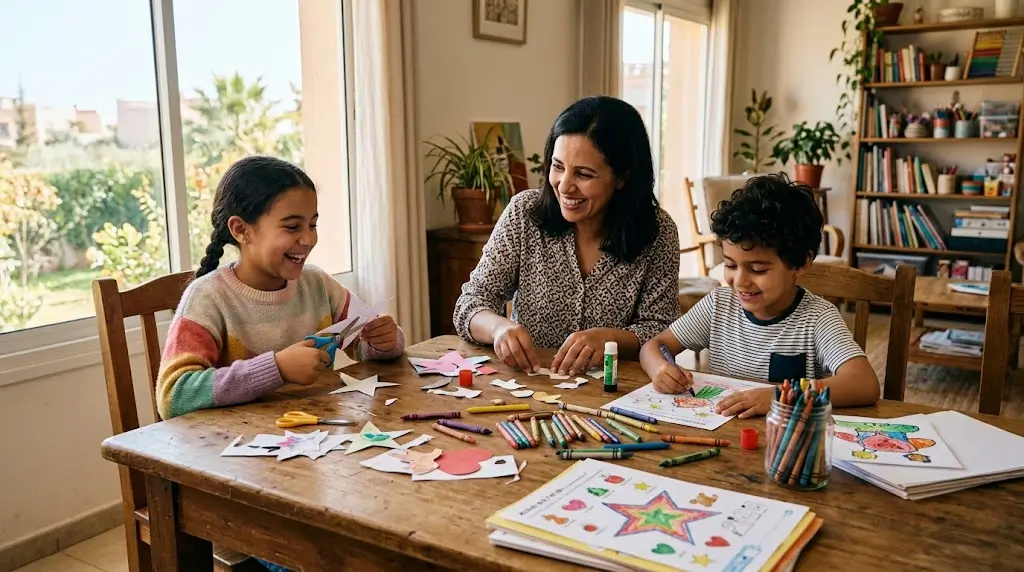
The best resource is the one that actually gets used. These five routines make it simple to weave printable learning activities for kids into your classroom, homeschool, or Sunday School schedule.
1. Morning Warm-Up Bins
Fill a bin or tray with a few coloring pages, tracing sheets, or cut and sort activities. Students start the day with a calm, hands-on task while you handle attendance and arrivals. Quiet starts settle nerves and signal that learning has begun.
2. Early Finisher Corners
Create a corner stocked with low prep classroom crafts and activity pages so fast finishers always have a purposeful next step. Rotate the options weekly to keep things fresh, and you will answer the classic question of what to do next before anyone asks it.
3. Collaborative Group Wall Art
Assign each student or table group one piece of a larger poster or banner. When the sections come together on the wall, children see how their work contributes to something bigger than themselves. Seasonal banners are especially useful in October and November.
4. Homeschool Unit Centers
Build each unit around a few themed stations, such as a reading page, a hands-on craft, and a writing prompt. Printables let homeschool parents mix and match activities to fit each child’s pace and interests.
5. Sunday School Craft Stations
Set up two or three stations that pair a Scripture or character-building lesson with a simple craft. Hands-on Sunday School crafts work especially well in rotating small groups, and volunteers only need to supervise rather than prepare from scratch.
Keep Exploring: Trusted Educational Links and Related Guides
Want to dig deeper into why hands-on learning matters? These respected organizations offer research-informed guidance for educators and families:
National Association for the Education of Young Children (NAEYC): Position statements and practical resources on developmentally appropriate practice in early learning.
Edutopia: Classroom-tested strategies on hands-on learning, engagement, and teacher-friendly planning.
Together, these sources offer a helpful backdrop for choosing printable learning activities for kids that match your students’ developmental stage.
If you enjoyed these learning strategies, explore our other classroom and holiday activity guides:
- Discover fun holiday projects in our Thanksgiving Bible Crafts for Kids guide.
- Check out creative cultural banners in our Day of the Dead Coloring Pages tutorial.
- Find screen-free ideas for daily routines in our Printable Learning Activities for Kids collection.
Conclusion: Make Printable Learning Activities for Kids Part of Your 2026–2027 Routine
Hands-on learning is not a throwback. It is a smart, evidence-informed counterbalance to a screen-heavy world. Here are the key takeaways:
Printables build real skills. Cutting, coloring, gluing, and tracing strengthen fine motor control, support memory, and nurture calm focus.
They save time and money. Digital printables for teachers mean instant downloads, print-as-needed flexibility, and less evening prep.
They work everywhere. From PreK–5 classrooms to homeschool tables and Sunday School rooms, the most effective printable learning activities for kids are simple, flexible, and fun.
Whatever your role, you are shaping how young children feel about learning. A single craft, a quiet coloring page, or a class banner on the hallway wall can become the moment a child feels proud of what they made. You do not need to do everything at once. Start with one activity this week and watch what happens.
Ready to bring low-prep, hands-on learning to your students or your own kids? Explore SmartPrint Kids on Teachers Pay Teachers and download your first resource today.